
PRO LOCO TRABIA – SAN NICOLA APS
Corso G. La Masa n.165 – 90019 Trabia (PA) C.F. 87003570824
Tel. 0918104090 prolocotrabiasannicola@gmail.com prolocotrabia@pec.it
Powered By GIO DIGITAL MARKETING
Trabia and Blasco Lanza
The fascinating hypothesis that a hamlet or fortress already existed in Trabia is supported by Michele Amari, who in his history of the "Muslims in Sicily" writes, "After the fall of Lampedusa in 554, the Byzantines took the step of erecting a castle on every fortress in Sicily suitable for defense."
Of course, we don't mean to say that they necessarily built a fortress in Trabia, but the indirect testimony of the Arab chronicler An Nuwari, in 747, almost 100 years before the arrival of the Arabs in Sicily, writes, "the country (Sicily) was restored on all sides by the Ru'm (Byzantines), who built fortresses and castles there."
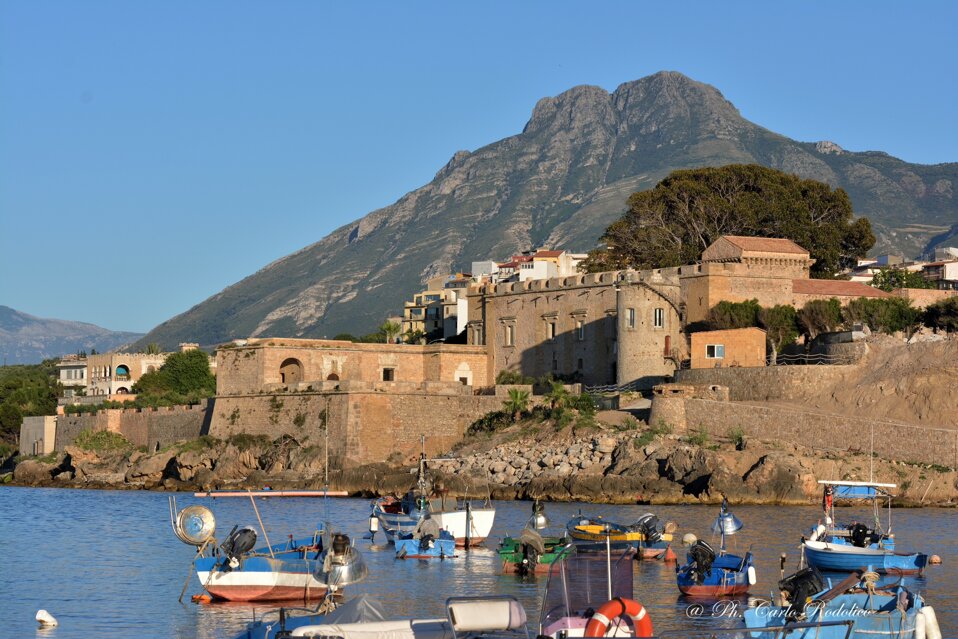
Now the hypothesis that the Byzantines built a fortified outpost to the west of Termini as a defense is not entirely remote. Although the first historical trace of the existence of a fortified hamlet dates back to 827, when the Arabs, before besieging Termini, settled on the beaches of Trabia and occupied the hamlet. This is evident from an Arab document from the Emir Aadelkum el-Kbir, sent to the commander who succeeded in conquering the territories, which writes, "I greatly praise your thought in building a castle in Tarbia to guard that cove... my great person tells you that when you finish restoring the walls and completing the fortification of Tarbia, you must continue your journey... Aadelkum el-Kbir, by the Grace of God, your Lord."
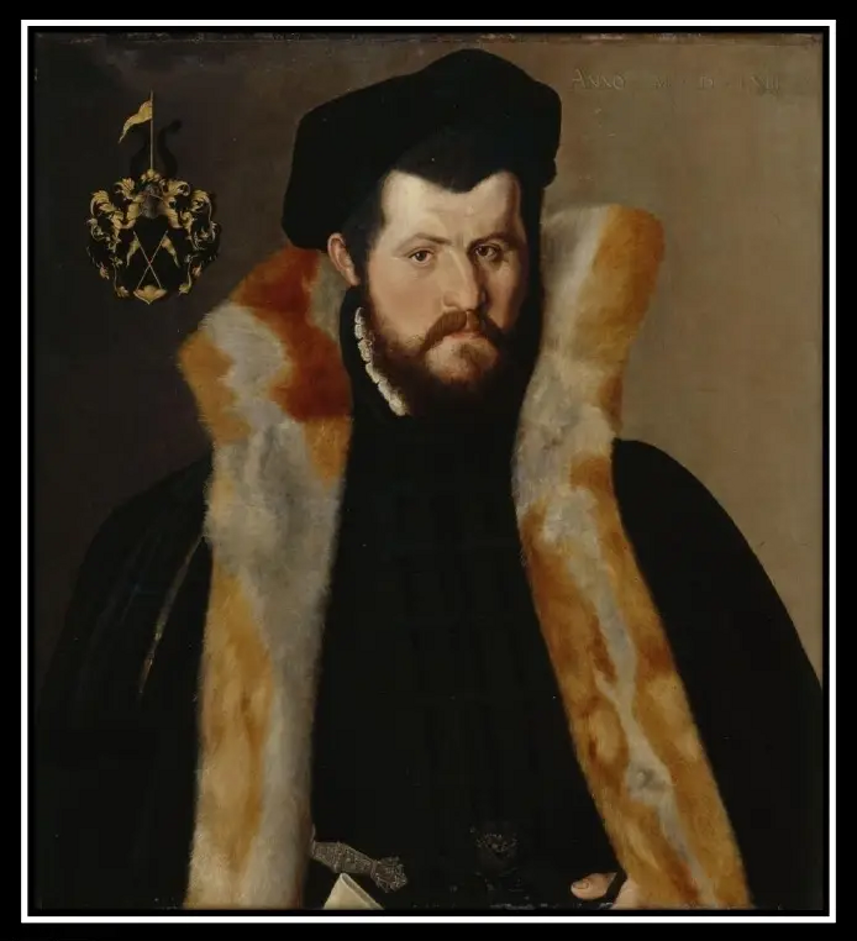
The first Lanza to possess the fiefdom of Trabia was Blasco Lanza (Catania 1466 – Palermo 1535). Blasco obtained the territory of Trabia (originally beginning on the western bank of the San Leonardo River, and therefore also including the entire Bragone district) through his marriage to the daughter of Leonardo di Bartolomeo, son of Leonardo di Bartolomeo, protonotary. and president of the Kingdom of Sicily, he obtained the territory of Trabia upon the death of Aloisa, whom he had married.
Lanza, a particularly astute politician, pleaded the case at the court of Ferdinand the Catholic to allow the territories of Trabia to be elevated to a fiefdom. Having obtained this permission, Blasco Lanza did not hesitate to include his wife's territories in the fiefdom. The people of Termita were not indifferent to Lanza's gesture and sent a representative to the King to lodge their official protest and demand justice. King Ferdinand, under pressure from the people of Termita, issued a decree in Valladolid in 1513 to initiate an investigation, the conclusions of which were to be used to formulate a definitive judgment. Unfortunately, however, these conclusions never reached the king.
After Ferdinand the Catholic's death, King Charles V ascended the throne. Following a new complaint from the citizens of Termini Imerese, he obtained the documents on February 22, 1522, which issued a ruling allowing Termini Imerese to regain part of its territory.
Later, as an everlasting reminder of the event, the citizens of Termini Imerese built a small church on the border with the territory of Trabia, using lime and flat stones from the adjacent river.
Blasco was well regarded by Ferdinand II of Aragon, first, and then by Charles V, obtaining the prestigious positions of judge of the Royal Grand Court, vicar general of the Kingdom, and royal councilor. He also held other important positions, such as vicar general of the Kingdom, Master Portulan, and five times magistrate of Palermo.
As Moncada himself wrote from Messina on March 22, 1516, to the Spanish regent, Lanza. which brought to Inquisitor Cervera the peremptory demand of the rebellious nobles to free the prisoners held in the Holy Office jails and immediately abandon the island. Blasco's mediation was a purely delaying ploy, as the rebels understood when he returned to the inquisitor with the response, that they present the request in writing. The rebels replied that they would instead present "puntas de lanzas y espadas" (points of spears and swords), thus openly launching the rebellion.
The General Council of the Municipality of Palermo was convened, and Lanza was imprudent enough to appear, without considering that his status as a citizen of Catania did not entitle him to do so. He was, in fact, chased out by popular fury and chased with cries of "get out of the city." He took refuge in the Chiaramonte Palace, known as the Steri, the viceroy's residence at the time, and was besieged by a riotous crowd demanding his immediate expulsion from Palermo. But despite Moncada himself promising from the balconies of the Steri that Blasco would leave the city the following day, the crowd threatened to ransack his house. This was what a group of troublemakers led by Emperor Frederick, one of the most prominent nobles of the revolt, were about to do, had they not been prevented by the providential intervention of some gentlemen well-liked by the people who opposed them. Before evening, the crowd again gathered around the Chiaramonte palace, this time demanding the immediate eviction of the viceroy, who decided not to waste time. He left the palace, followed by Lanza and a few other trusted followers, and embarked for Milazzo.
Blasco, instead of continuing to Messina with Moncada, boarded the brigantine of the Baron of Raddusa, which was sailing to Catania, where he counted on his strong influence to keep it loyal to the viceroy. He told there that he had been expelled from Palermo with the cry of "fora catanisi" (out of Catania), which could not fail to sound offensive to the ears of his fellow citizens, and he also obtained the appointment of an ambassador to Moncada to renew the city's obedience. The Palermitans, however, had not been slow to inform the Catanese that Lanza's expulsion concerned only his person and had no bearing whatsoever on the good relations between the two cities. It was not long before the people of Catania also rose up against the hated Moncada government, nullifying the previous resolutions in his favor and the powers of the ambassador assigned to him. Thus, Lanza, prompted by the rioting crowd, took refuge in the castle of Aci, and soon after joined Moncada in Messina.